
Purchasing firewood for your home during the colder months often raises questions about measurements and quantities, especially when different regions employ distinct units of volume. For those accustomed to the metric system prevalent in the United Kingdom, navigating terms like cords can initially seem perplexing. Gaining clarity on how to convert these measurements into cubic metres not only simplifies the buying process but also ensures you receive the appropriate amount of wood for your heating needs.
Understanding the imperial cord measurement system
What Exactly Constitutes a Cord of Wood
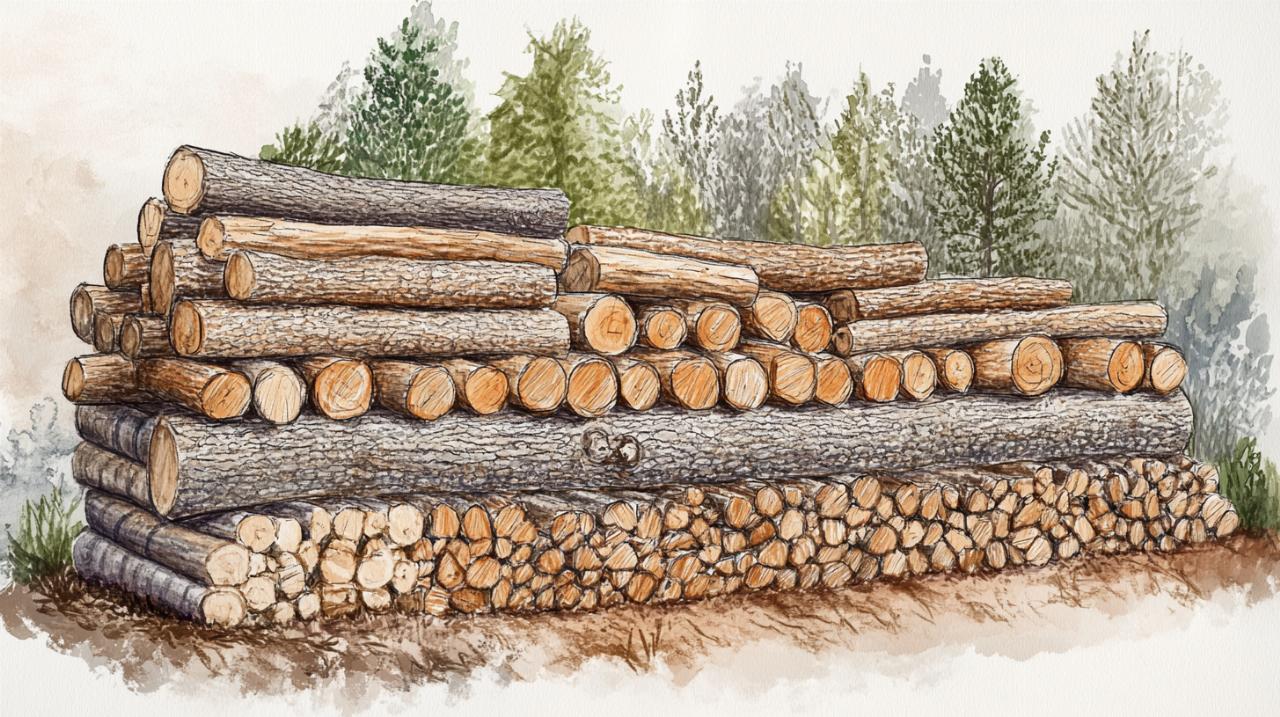
A cord represents a standardised unit of volume specifically designed for measuring firewood. Defined precisely as a stack measuring eight feet in length, four feet in height, and four feet in depth, this configuration yields a total of one hundred and twenty-eight cubic feet. This imperial measurement has long served as the benchmark for firewood transactions, particularly in regions where traditional systems remain prevalent. The cord provides a consistent reference point, allowing both suppliers and purchasers to communicate quantities with clarity. It is worth noting that the physical arrangement of the wood stack directly influences the actual usable volume, since air spaces inevitably form between individual pieces. Neatly stacked firewood, cut to lengths of approximately twenty-five to thirty centimetres, typically comprises around seventy per cent solid wood and thirty per cent air. This proportion can vary depending on the cutting style and stacking technique, but understanding this relationship helps avoid surprises when estimating the actual amount of burnable material.
Historical Context and Current Usage in North America
The cord measurement has its roots in historical practices developed across North America, where vast forests and reliance on wood heating necessitated a reliable standard. Over time, this unit became entrenched in regional commerce and regulatory frameworks, ensuring that transactions remained transparent and fair. Today, the cord continues to dominate firewood sales across the United States and Canada, even as other parts of the world have transitioned to metric systems. Local family businesses, such as Boston Firewood, exemplify this tradition by offering kiln-dried and seasoned firewood in quantities ranging from full cords to smaller bundles, with delivery and stacking services included. Meanwhile, in Australia, firewood is often sold by weight, measured in kilograms, reflecting yet another approach to quantifying this essential resource. Recognising these regional differences is crucial for anyone purchasing firewood internationally or comparing prices across borders, as the choice of measurement system directly impacts how value and quantity are perceived.
Mastering the Conversion Formula: From Cubic Feet to Cubic Metres
Step-by-step calculation method for accurate conversion
To convert a cord of firewood into cubic metres, one must first understand the relationship between cubic feet and cubic metres. Since one cubic metre is defined as a cube with each side measuring one metre, it occupies a volume equivalent to approximately thirty-five point three cubic feet. Given that a cord contains one hundred and twenty-eight cubic feet, dividing this figure by thirty-five point three yields approximately three point six two cubic metres. More precisely, the exact conversion factor establishes that one cord equals three point six two four five five six three six three seven seven six cubic metres. This level of precision ensures accuracy, particularly when larger quantities are involved or when calculations must align with regulatory standards. For those working in reverse, converting cubic metres back into cords involves multiplying the volume in cubic metres by approximately zero point two seven six, which reflects the reciprocal relationship. Familiarity with this conversion empowers buyers to confidently navigate different markets and make informed comparisons, regardless of the measurement system employed by the supplier.
Common Pitfalls and How to Avoid Measurement Errors
Mistakes in measurement often arise from misunderstanding the nature of stacked wood and the inclusion of air spaces. Purchasing firewood in builder's bags or as uncut logs may result in acquiring more air than solid wood, particularly if the pieces are irregularly shaped or loosely arranged. To mitigate this risk, it is advisable to request that firewood be stacked neatly and to verify the dimensions of the stack before finalising the purchase. Additionally, confusion between full cords, half cords, and face cords can lead to significant discrepancies in the actual volume received. A face cord, for instance, represents only one-third of a full cord, measuring approximately forty-two point six six cubic feet. Buyers should always clarify the specific type of cord being offered and confirm that the measurement aligns with their expectations. Another potential issue involves variations in wood density, which affects weight but not volume. Different species, such as hornbeam, oak, and spruce, exhibit distinct densities, meaning that a cubic metre of one type may weigh considerably more or less than another. While this does not alter the volume conversion, it influences the overall heating efficiency and storage requirements, factors that should inform purchasing decisions.
Practical Applications for Firewood Purchasers and Suppliers
Making informed decisions when buying logs for heating
Armed with knowledge of the conversion from cords to cubic metres, consumers can approach firewood purchases with greater confidence and precision. Whether sourcing kiln-dried logs for immediate use or seasoned firewood for long-term storage, understanding the actual volume ensures that heating needs are met without over-purchasing or running short during peak demand. Suppliers who operate in both imperial and metric markets benefit from this clarity as well, as it allows them to communicate effectively with a diverse customer base and maintain transparency in pricing. For instance, recognising that a full cord equates to roughly three point six two cubic metres enables straightforward comparisons with suppliers offering wood by the stere, a metric unit synonymous with one cubic metre. This cross-referencing simplifies the process of evaluating value, particularly when prices are quoted in different currencies or adjusted for delivery and stacking services. Furthermore, awareness of air space percentages and wood density helps buyers select the most appropriate species for their stoves or fireplaces, balancing efficiency, burn time, and ease of handling.
Comparing prices and quantities across different measurement systems
The ability to convert between cords and cubic metres proves invaluable when comparing offerings from suppliers in different regions or countries. For example, a vendor in North America might advertise firewood at a certain rate per cord, while a European counterpart lists prices per cubic metre. By applying the conversion factor, buyers can determine which option delivers better value based on the actual volume of wood received. This is especially relevant when evaluating bundled services such as delivery and stacking, which may vary in cost depending on local practices and distances travelled. Additionally, understanding the equivalence allows for scalability in larger purchases, such as when acquiring firewood for commercial heating systems or community projects. A quick reference guide illustrating conversions for one, five, ten, fifteen, twenty, twenty-five, thirty, forty, and fifty cords into cubic metres facilitates rapid calculations and supports strategic planning. Ultimately, mastering this conversion enhances the overall purchasing experience, ensuring that decisions are grounded in accurate data and aligned with both budgetary constraints and heating requirements, all while navigating the complexities of a global marketplace with ease and confidence.