
Spanish cuisine stands as one of the most vibrant and celebrated culinary traditions in the Mediterranean, offering an extraordinary blend of flavours, textures, and cultural heritage. From bustling tapas bars in Madrid to coastal restaurants in Valencia, the country's gastronomic landscape invites food enthusiasts to explore dishes that have been perfected over centuries. Whether you are seeking to recreate these iconic meals in your own kitchen or simply wish to understand the stories behind them, Spanish cooking provides an accessible yet sophisticated gateway into Mediterranean dining. The richness of Spanish food culture reflects regional diversity, historical influences, and a profound respect for quality ingredients that transform simple components into unforgettable meals.
Tapas: the art of spanish small plates
Understanding the Tapas Culture and Tradition
The tapas tradition represents far more than merely serving small portions of food. It embodies a social philosophy that encourages conversation, sharing, and leisurely enjoyment of meals. Originating from the Spanish custom of covering wine glasses with small plates to keep out insects, tapas evolved into an integral part of Spanish dining culture. These small dishes allow diners to sample multiple flavours during a single meal, creating a communal experience that brings people together. The beauty of tapas lies in their versatility, ranging from simple olives and almonds to elaborate preparations involving seafood, cured meats, and vegetables. This approach to dining emphasises quality over quantity, encouraging diners to savour each bite while engaging in lively conversation. The ritual of moving from one tapas bar to another, known as going for tapas or tapeo, remains a cherished social activity across Spain, particularly in cities like Seville, Granada, and San Sebastian.
Popular Tapas Varieties to Prepare at Home
Recreating authentic tapas at home offers an excellent opportunity to bring Spanish hospitality to your table. Among the most beloved varieties are patatas bravas, gambas al ajillo, croquetas, and tortilla española, each offering distinct flavours and textures. Patatas bravas feature crispy fried potatoes topped with a spicy tomato sauce and creamy aioli, delivering a satisfying contrast of temperatures and tastes. Gambas al ajillo, or garlic prawns, require just a handful of ingredients including fresh prawns, garlic, olive oil, and a touch of chilli, yet produce remarkably complex flavours. Croquetas, creamy béchamel-based fritters often filled with ham or cod, provide a rich and indulgent option that pairs beautifully with a cold beer or glass of wine. The joy of preparing delicious tapas and paellas at home lies in their adaptability, allowing you to adjust ingredients according to personal preferences and seasonal availability whilst maintaining the authentic spirit of Spanish cuisine.
Paella: spain's iconic rice dish
The Origins and Regional Variations of Paella
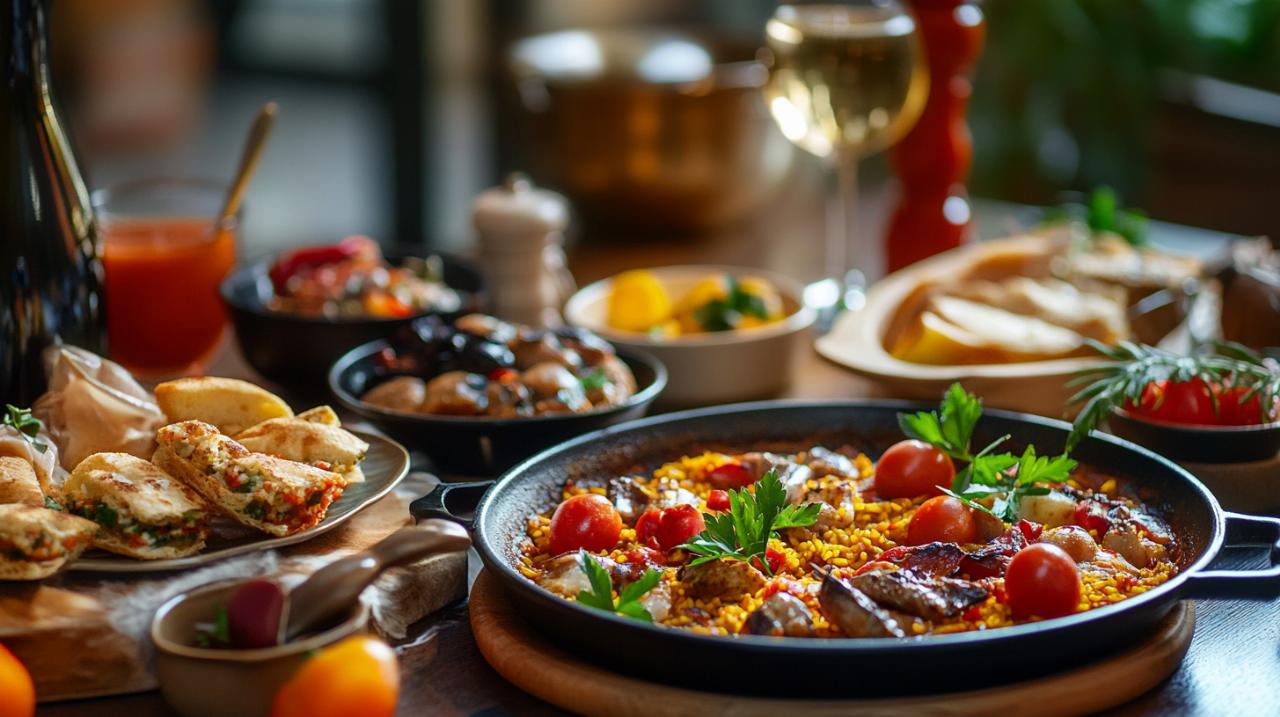
Paella originated in the Valencia region during the eighteenth century, where farmers and labourers would prepare the dish over open fires using locally available ingredients. The name derives from the wide, shallow pan traditionally used for cooking, which allows the rice to develop a coveted crispy bottom layer known as socarrat. Valencian paella traditionally contains rabbit, chicken, green beans, and butter beans, reflecting the agricultural landscape of the region. As the dish gained popularity, coastal communities created seafood variations incorporating prawns, mussels, squid, and fish, whilst mixed paellas combine both land and sea proteins. Each region throughout Spain has developed its own interpretation, with Catalonia favouring fideuà made with short noodles instead of rice, and other areas introducing local ingredients such as artichokes, peppers, or sausages. Understanding these regional differences enhances appreciation for paella as a living culinary tradition rather than a fixed recipe.
Essential Ingredients for Authentic Seafood and Meat Paella
Creating authentic paella requires attention to several key ingredients that define the dish's characteristic flavour and appearance. The foundation begins with Spanish short-grain rice, preferably bomba or Calasparra varieties, which absorb liquid without becoming mushy. Saffron threads provide the distinctive golden colour and subtle floral notes that distinguish paella from other rice dishes. High-quality stock, whether fish, chicken, or vegetable, forms the cooking liquid and should be richly flavoured to infuse the rice properly. For seafood paella, fresh prawns, mussels, squid, and firm white fish create a symphony of ocean flavours, whilst meat versions typically feature chicken thighs, rabbit, and sometimes chorizo or pork ribs. Spanish paprika, both sweet and smoked varieties, adds depth and a characteristic reddish hue to the sofrito base. Extra virgin olive oil, garlic, tomatoes, and fresh or frozen peas complete the essential ingredients. The cooking technique matters as much as the components, with the rice traditionally cooked uncovered to allow proper evaporation and development of the prized socarrat crust.
Gazpacho: the refreshing cold soup
Why Gazpacho is the Perfect Summer Dish
Gazpacho emerges as the quintessential warm-weather dish, offering both refreshment and nourishment during Spain's scorching summer months. This cold soup originated in the Andalusian region, where agricultural workers required sustaining meals that could be prepared without cooking and consumed throughout the day. The dish's genius lies in its simplicity, transforming ripe tomatoes, cucumbers, peppers, garlic, bread, olive oil, and vinegar into a vibrant, cooling elixir. Gazpacho provides excellent hydration whilst delivering vitamins, minerals, and antioxidants from fresh vegetables. The soup's smooth texture and bright flavour profile make it equally suitable as a starter, light lunch, or refreshing snack. Beyond its practical benefits, gazpacho represents the Mediterranean diet's emphasis on fresh, unprocessed ingredients and their natural flavours. The dish requires no cooking, preserving the raw vegetables' nutritional content and crisp taste. As temperatures rise, few dishes offer such satisfying refreshment whilst maintaining the substance and complexity expected from Spanish cuisine.
Simple steps to make traditional tomato-based gazpacho
Preparing authentic gazpacho requires selecting the ripest, most flavourful tomatoes available, as they form the foundation of the soup. Begin by roughly chopping ripe tomatoes, cucumber, green pepper, and a small amount of onion, removing seeds from the pepper to prevent bitterness. Add torn pieces of day-old bread that have been briefly soaked in water, which provides body and traditional texture to the soup. Fresh garlic cloves contribute pungency, though the amount should be adjusted according to personal preference. Combine all ingredients in a blender with generous amounts of extra virgin olive oil, sherry vinegar, and salt, processing until completely smooth. For the silkiest texture, strain the mixture through a fine-mesh sieve, pressing firmly to extract maximum liquid. Refrigerate the gazpacho for at least two hours before serving, allowing flavours to meld and the soup to become properly chilled. Traditional garnishes include diced cucumber, pepper, onion, hard-boiled egg, and croutons, offering contrasting textures to the smooth soup. Some cooks add a touch of cumin for additional complexity, whilst others prefer the pure, unadulterated flavour of perfectly ripe vegetables.
Churros: spain's beloved sweet treat
The History and Cultural Significance of Churros
Churros hold a special place in Spanish culture, transcending their role as mere pastries to become symbols of celebration, comfort, and tradition. The origins of churros remain debated, with some historians suggesting Portuguese sailors brought the concept from China, whilst others claim Spanish shepherds created them in mountain regions where fresh bread was scarce. Regardless of their beginnings, churros became firmly embedded in Spanish daily life, particularly as a breakfast treat or late-night indulgence. The tradition of enjoying churros with thick hot chocolate for dipping, known as chocolate con churros, represents a cherished ritual passed down through generations. Churros also feature prominently during festivals and celebrations, with specialised churrerías operating late into the night to serve revellers. The pastry's appeal lies in its simplicity and satisfying contrast between the crispy exterior and soft, doughy interior. In Madrid and other major cities, historic churrerías have become institutions, maintaining traditional recipes and techniques that produce consistently exceptional results.
How to Achieve Perfectly Crispy Churros with Chocolate Dipping Sauce
Creating restaurant-quality churros at home requires attention to both the dough preparation and frying technique. The dough begins with water, butter, and a pinch of salt brought to a rolling boil, then removed from heat before flour is added all at once. Vigorous stirring transforms the mixture into a smooth, thick paste that pulls away from the pan's sides. The consistency should be firm enough to hold its shape when piped yet soft enough to extrude smoothly through a star-shaped nozzle. Heat oil to approximately one hundred and ninety degrees Celsius, maintaining consistent temperature throughout frying to ensure even cooking. Pipe dough directly into hot oil, cutting with scissors to desired lengths, then fry until golden brown on all sides. Drain churros on absorbent paper before rolling in granulated sugar mixed with a touch of cinnamon. The accompanying chocolate sauce should be rich and thick, prepared by melting dark chocolate with milk or cream and a small amount of cornflour for proper consistency. The chocolate should coat the churros without being so thick it overwhelms the delicate pastry, creating a harmonious balance between the crispy, sweet dough and luxurious chocolate.
Patatas bravas: fiery fried potatoes done right
What makes patatas bravas a tapas bar favourite
Patatas bravas have earned their status as a tapas bar essential through their irresistible combination of textures, flavours, and satisfying simplicity. The dish appeals to diverse palates, offering comfort food appeal whilst delivering bold, assertive flavours through its characteristic spicy sauce. The name bravas translates to fierce or wild, referencing the heat level of the traditional tomato-based sauce that tops the crispy potatoes. This tapas dish demonstrates the Spanish talent for elevating humble ingredients into something extraordinary, transforming basic potatoes into a memorable culinary experience. The contrast between the crispy exterior and fluffy interior of properly fried potatoes provides textural interest, whilst the spicy sauce adds moisture and flavour complexity. Many establishments serve patatas bravas with both the traditional bravas sauce and a cooling alioli, allowing diners to customise heat levels according to preference. The dish's popularity also stems from its versatility, functioning equally well as a light snack, substantial side dish, or component of a larger tapas spread. Regional variations exist throughout Spain, with some areas favouring milder sauces and others increasing the chilli content for those who appreciate substantial heat.
Crafting the perfect spicy bravas sauce
The authentic bravas sauce requires careful balance between heat, acidity, and savoury depth to achieve its characteristic flavour profile. Begin by gently frying finely chopped onions and garlic in olive oil until softened and fragrant, establishing the aromatic foundation. Add Spanish paprika, both sweet and hot varieties, along with a touch of cayenne pepper for additional heat, toasting briefly to release essential oils. Incorporate tinned tomatoes, crushing them thoroughly to create a smooth base, then simmer gently to concentrate flavours and reduce excess liquid. Some traditional recipes include a small amount of flour or breadcrumbs to provide body, whilst others rely solely on reduction for proper consistency. Sherry vinegar adds brightness and cuts through the richness, whilst a pinch of sugar balances acidity. The sauce should coat the back of a spoon without being overly thick, maintaining enough fluidity to dress the potatoes without overwhelming them. For the potatoes themselves, cut them into irregular chunks rather than uniform cubes, creating varied surface areas that crisp differently during frying. Double-frying ensures maximum crispiness, with an initial lower-temperature fry to cook the interior followed by a high-temperature fry for golden exteriors. Serve immediately whilst hot, generously drizzling with bravas sauce and optionally adding a dollop of garlic aioli for cooling contrast.
Tortilla española: the classic spanish omelette
Mastering the Technique for a Proper Spanish Tortilla
The tortilla española represents one of Spain's most iconic dishes, yet achieving the perfect balance between set exterior and creamy interior requires practice and technique. Unlike French omelettes that cook quickly over high heat, Spanish tortillas develop slowly over moderate temperatures, allowing the eggs to set gradually whilst maintaining moisture. The process begins with thinly sliced potatoes, traditionally cooked in abundant olive oil until tender but not browned, creating a foundation that defines the tortilla's texture. The quantity of oil might seem excessive to those unfamiliar with Spanish cooking techniques, yet this confit-style preparation ensures the potatoes become impossibly tender whilst absorbing flavourful olive oil. Once cooked, drain the potatoes thoroughly, reserving the oil for future use, then combine them with beaten eggs seasoned simply with salt. The mixture should rest briefly, allowing potatoes to absorb some egg and flavours to meld. Pour the mixture into a heated pan with a thin layer of oil, cooking over medium-low heat whilst occasionally shaking the pan to prevent sticking. When the edges begin setting but the centre remains liquid, place a plate over the pan and confidently flip the tortilla, sliding it back to cook the second side. The finished tortilla should be golden outside with a slightly runny centre, though preferences vary regarding doneness.
The great debate: with or without onions
The question of whether authentic tortilla española should include onions has sparked passionate debates among Spanish cooks for generations, with regional preferences and family traditions influencing opinions. Traditionalists from certain areas insist that only potatoes and eggs constitute a proper tortilla, arguing that onions introduce unnecessary sweetness and moisture that compromise texture. Others maintain that slowly caramelised onions provide essential depth and complexity, transforming the dish from simple to sublime. Those favouring onions typically cook them alongside the potatoes, allowing them to soften and sweeten gradually in the olive oil. The onions should become translucent and tender without browning, contributing subtle flavour rather than dominating the dish. Opponents argue that the pure, straightforward combination of eggs and potatoes requires no embellishment, showcasing quality ingredients through simplicity. Regional variations throughout Spain reflect this divide, with Madrid generally preferring onion-free versions whilst other areas embrace the addition. Ultimately, both approaches produce delicious results, and the choice often depends on personal preference rather than any definitive standard. The debate itself reflects the passion Spaniards bring to their culinary traditions, where even seemingly minor variations inspire spirited discussion and fierce loyalty to particular methods. Whether prepared with or without onions, a properly executed tortilla española remains one of Spanish cuisine's greatest achievements, equally suitable for breakfast, lunch, dinner, or as part of a tapas selection.